
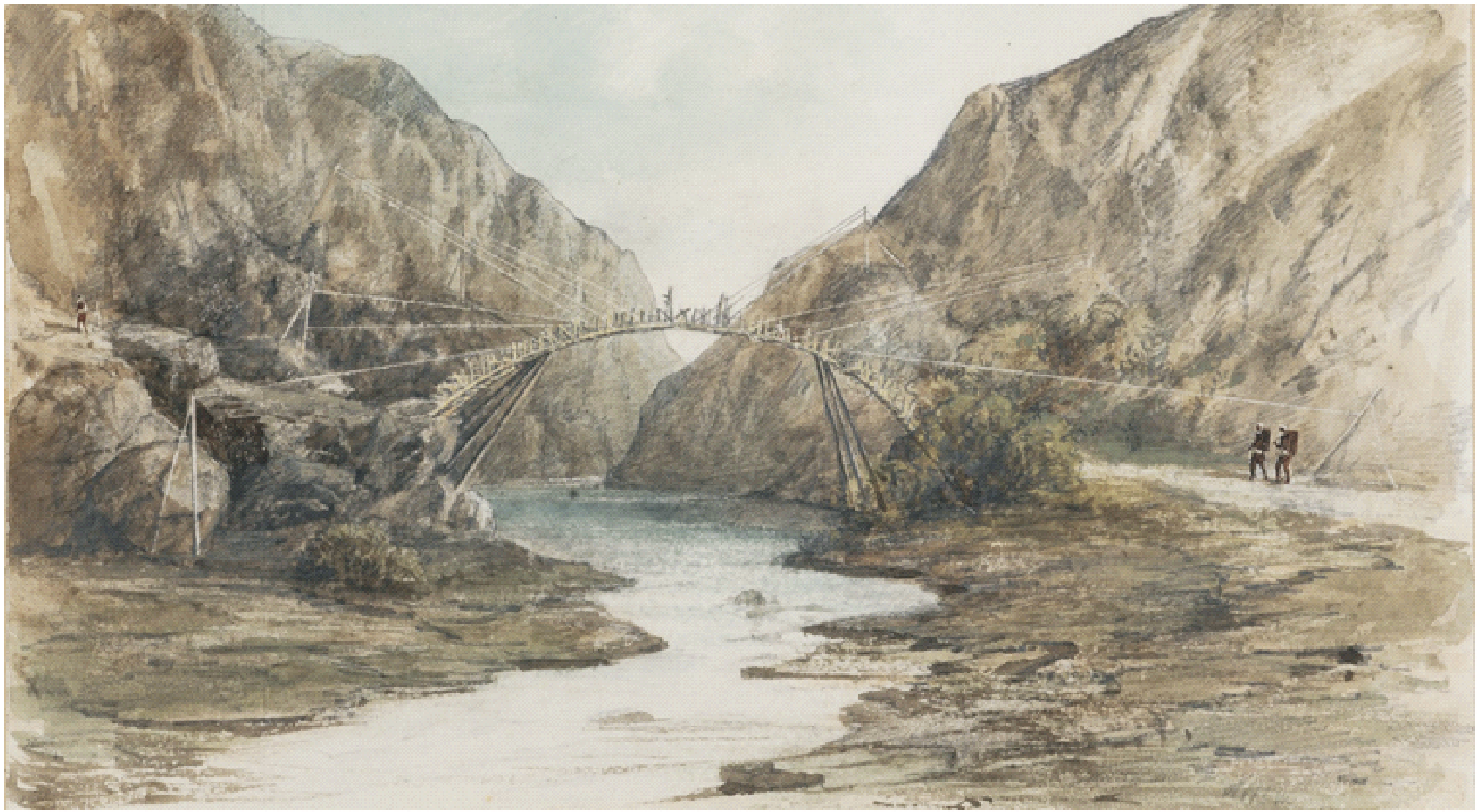
In Part 1, we saw how German and Indian collaborators came together in remarkable ways to explore the Himalayas, and in Part 2, we followed the inspiring journey of our own Nain Singh Rawat, who rose to become a legendary surveyor and the celebrated “Pundit of Pundits.” Now, we come to the concluding part of this series.
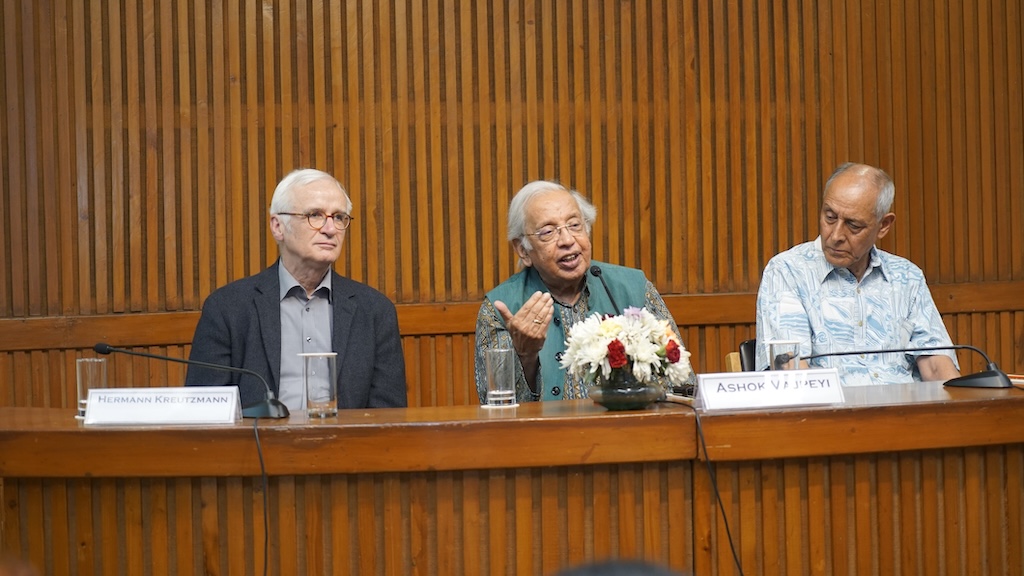
After the extraordinary tale of Nain Singh Rawat, the audience sat in a kind of quiet awe, as if new contours of understanding had just opened before them. It felt like the Himalayas themselves had expanded—not just in geography, but in imagination and history.
It was then time for the closing remarks from the chair, delivered by Ashok Vajpeyi, a noted Hindi poet, essayist, and cultural thinker whose work has long engaged with questions of literature, art, and civilisational imagination.
I expected a formal, customary conclusion to wrap things up. A few polite sentences. Thank you, good night, and done.
It didn’t turn out that way. What followed over the next few minutes turned out to be something quite different—unexpected, reflective, and in many ways, a fitting final layer to an already enchanting evening.
He didn’t speak like an expert giving a lecture. In fact, he began by gently stepping away from authority altogether. He said he was not an archaeologist or a geographer. He was there simply because he could not refuse his friend Shekhar Pathak’s invitation.
What followed didn’t feel like a structured talk. It felt more like listening to someone think out loud—moving from one idea to another, letting stories connect in unexpected ways. I remember feeling that he wasn’t trying to prove anything so much as show how ideas travel.
The Mountains That Don’t End
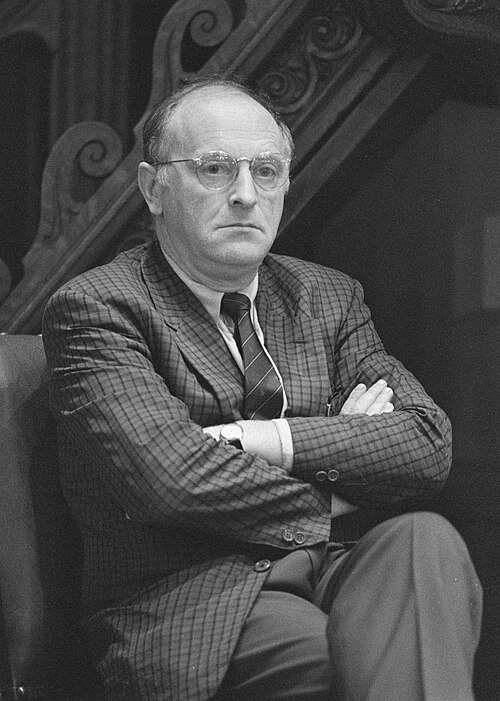
He first spoke about the Russian poet Joseph Brodsky.
He referred to a late interview where Brodsky, just days before his death, was said to have reflected on Indian philosophical thought. He described Indian metaphysics using the very landscape being celebrated that evening:
“The nearer you go, you find there is another range of mountains behind. And as you keep on moving, there are ranges and ranges”.
To Brodsky, the Himalayas were not just a physical barrier but a metaphor for the infinite depth of thought.
Hearing this, it wasn’t really about geography anymore. It felt like a way of describing thought itself—how understanding never really “finishes.” You think you’ve arrived somewhere, and then something else opens up behind it.
Whether Brodsky actually said it in exactly that way or not, what stayed with me was the feeling behind the story: that some minds see infinity even in landscapes.
A Long Journey of Ideas
From there, he moved into something like a long historical chain.
He spoke of Dara Shikoh, the Mughal prince who translated the Upanishads into Persian, in a work known as Sirr-i-Akbar. From there, he described how these ideas travelled further into Europe, eventually reaching thinkers like Arthur Schopenhauer through the Latin translation of the Upanishads (Oupnek’hat).
He told it almost like a river of ideas—changing language as it moved, but still carrying something across centuries.
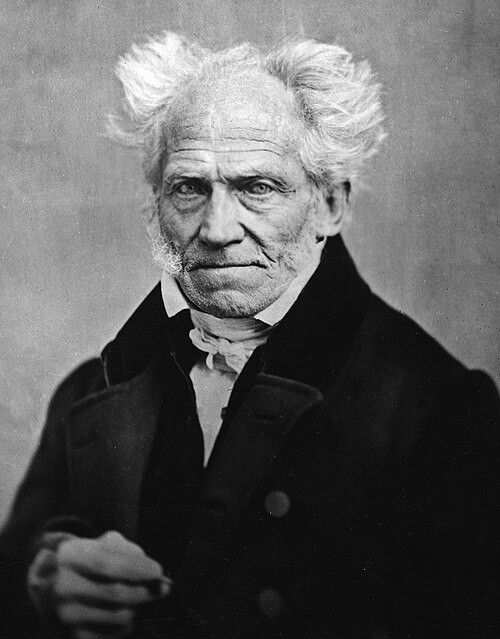
It wasn’t a strict history lesson. It felt more like he was showing how thoughts don’t stay in one place.
Beethoven and a Different Kind of Listening
Then came a surprising turn.
He spoke of Ludwig van Beethoven—his silence, his struggle, his inner life—and suggested that even European music had, in imaginative ways, brushed against Indian thought.
Beethoven kept a diary, or Tagebuch, which began with a reproduction of the Vedic hymn, the Nasadiya Sukta. In his notes, Beethoven also recorded Goethe’s famous tribute to the play Shakuntala and expressed a radical desire to create a musical ensemble of religious voices from India. Vajpeyi noted that scholars argue this encounter with Indian wisdom helped Beethoven move past his depression, leading his later works to become “more open, more human,” and less severe than his earlier compositions.
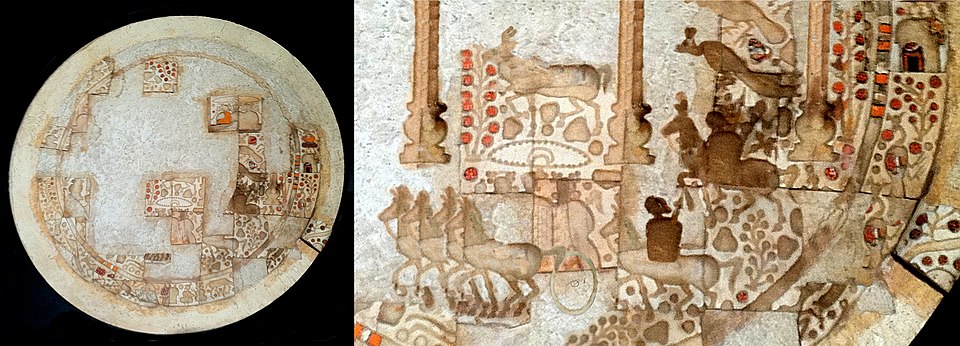
The way he told it, Beethoven seemed less like a distant European genius and more like someone listening across cultures, trying to hear something beyond his own world.
Still, as he spoke, I also understood this was not documented history in a strict sense—it was a way of imagining connections, of seeing what might be possible between distant traditions.
Two Lives That Almost Met
Another story he shared stayed with me for a different reason.
He spoke of Fernando Pessoa and Mahatma Gandhi, suggesting that they had once lived in the same place—Durban—but never truly met in any meaningful way.
In his telling, a fragment found among Pessoa’s writings even imagined Gandhi as the only truly “great man” of his time.
Whether or not that text exists in exactly that form, the idea itself was striking: two people who lived on overlapping paths in the world, but never actually crossed each other’s understanding.
It made me think about how often history is full of near-encounters that never quite happen.
How We Draw the World
Finally, he turned to maps.
Vajpeyi reflected on the nature of mapping itself . He noted that map-making is one of the most interesting stories of humankind because it requires lives to be risked in “hostile, adverse circumstances” to create the records we take for granted today
He connected this to art, mentioning the work of Gulam Mohammed Sheikh, whose art plays with the idea of maps and layered worlds.
He contrasted Western ways of drawing space—where everything is seen from a single fixed viewpoint—with Indian miniature paintings, where many things can happen at once in the same frame.
A battle, a ritual, a small everyday moment—all existing together.
It wasn’t just about painting. It felt like he was talking about how reality itself can be seen in different ways.
A Gentler Way of Seeing the World
He ended on a quieter note.
Vajpeyi concluded by reframing India’s historical role . Rather than the dominant “Vishwaguru” (world teacher), he suggested that India has served as a “companion” and a “friend” to the world . Through humility and a constant “search for new areas,” the knowledge emerging from the Himalayas has provided a shared vision that belongs
Not someone standing above others, but someone walking alongside them, sharing ideas, and being changed in the process.
After the session ended, a woman from the audience stood up and spoke quite spontaneously. Her comment summed up the evening in a perfect way.
I just wanted to say that I don’t really have anything to add, except that I think this has been one of the best sessions we’ve had in a very long time. I came here with a lot of hesitation because I’m not really interested in biography or very ancient history.
But it’s amazing to see how contemporary these voices feel. I’m really happy that the discussion expanded the entire vision into poetry, literature, and the way different cultures and countries ultimately become familiar and connected.
Thank you so much.
A note I carry from that evening
Walking out, I remember thinking that what I had heard was not a lecture in the usual sense. It was a series of stories—some grounded in history, others more interpretive, all tied together by imagination.
Like the Himalayas, it does not reveal everything at once. It invites you to come closer. And just when you think you have understood, it shows you another range waiting beyond.
That is why the story of mapping the Himalayas is not just about maps.
It is about people—curious, restless, searching people—trying to find their place in a world that is always larger than they imagined.
The larger picture quietly comes into focus—not of mountains as static giants on a map, but as living participants in a centuries-long human conversation.
From the painstaking steps of the “pundits” who measured the Himalayas inch by inch, to the German explorer-artists like the Schlagintweit brothers who tried to capture their vastness in drawings, the Himalayas emerge less as a boundary and more as an invitation—drawing in scientists, spies, poets, and pilgrims alike.
What began as an imperial exercise in mapping slowly transforms into something deeper: a shared human attempt to understand scale, distance, and meaning itself. What lingers is not the precision of measurement, but the humility it produced—the realisation that every line drawn on a map is also a question left open by the mountains.
And that’s how I thank the universe for making me part of this wonderful evening.
(Some Photos, courtesy :Wikipedia)
Part -1 : Beyond Exploration: The Human Stories Behind the Schlagintweit Drawings
Part -2 : Pundit of Pundits: The Man Who Measured the Himalayas—Step by Step

A very befitting closing tribute to the title, pictures, stories and the enterprise of the exhibition. Himalaya the nagadhiraja will remain the unexplored mystery for eternity. 🙏🙏
An interesting and passionate Summery presented by Kamal Karnatak ji of the entire event to make me feel as if I was myself attending the event . My heartiest congratulations to him and to the organizers of this Event.