
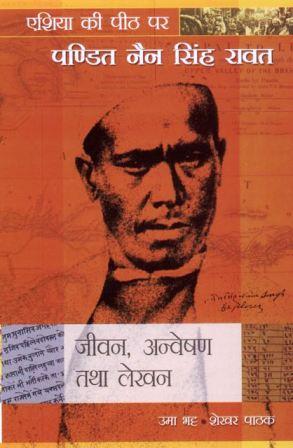
“Asia ki Peeth Par Pandit Nain Singh Rawat Jeewan, Anweshan tatha Lekhan” by Uma Bhatt and Shekhar Pathak
Life, exploration and writings of great 19th-century explorer Pundit Nain Singh Rawat (1830-1895). With three of his original Hindustani diaries, one book “akhsanya darpan” and three long reports published in the Journal of the Royal Geographical Society, London, with photographs, paintings and rare maps.
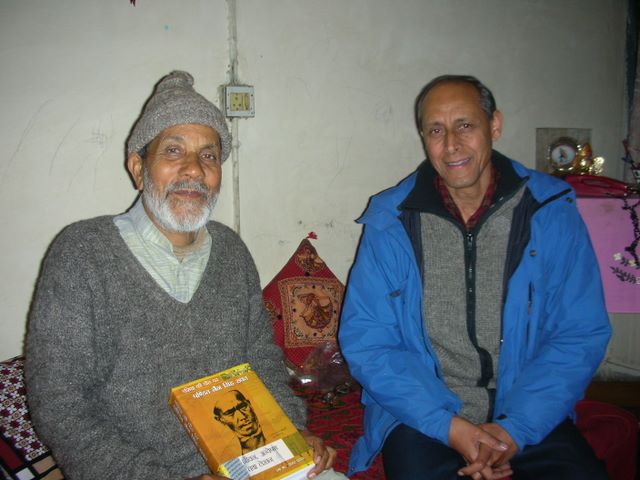
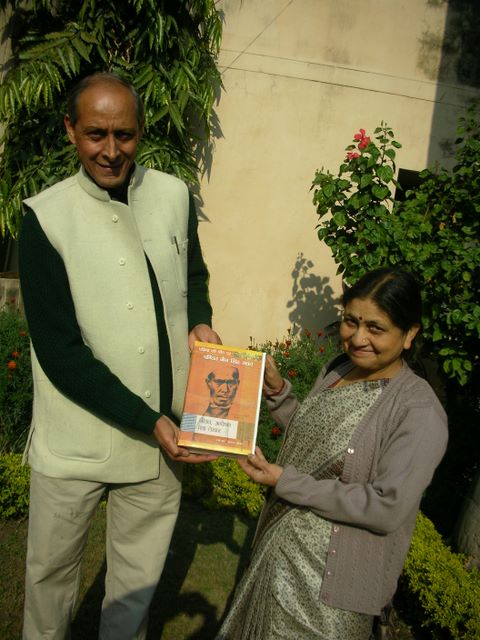
This book is not just a biography—it is an awakening to one of the most extraordinary yet under-appreciated figures in the history of exploration: Nain Singh Rawat.
This book brings alive the remarkable journey of a man who walked, measured, and mapped vast stretches of Asia at a time when such feats demanded not only intelligence but immense courage and resilience. Through its pages, you don’t simply learn about expeditions—you experience the grit of a surveyor navigating hostile terrains, political secrecy, and the constant uncertainty of survival.
What makes this work truly compelling is how it blends three powerful dimensions: life, exploration, and writing. It doesn’t reduce Rawat to a historical figure frozen in time; instead, it reconstructs his world—his motivations, his struggles, and the intellectual rigor behind his contributions to mapping regions like Tibet and Central Asia. The narrative highlights how his work became a crucial part of the larger framework of the Great Trigonometrical Survey, yet never loses sight of the human story behind the achievements.
The book excels in making complex historical and geographical details accessible without losing depth. Whether it is describing the ingenious methods Rawat used to conduct surveys in secrecy or shedding light on the socio-political context of the time, the writing remains engaging and immersive. You come away not only informed but genuinely inspired.
For readers interested in history, geography, exploration, or unsung heroes of India, this book offers immense value. It fills a critical gap by giving due recognition to a figure whose contributions shaped our understanding of Asia’s geography but whose story is still not widely known.
More importantly, it leaves you with a sense of pride and curiosity—pride in Rawat’s achievements, and curiosity to learn more about the hidden histories that surround us.
If you’re looking for a book that is both intellectually enriching and deeply inspiring, “Asia ki Peeth Par: Pandit Nain Singh Rawat – Jeevan, Anweshan tatha Lekhan” deserves a place on your shelf. It doesn’t just tell a story—it restores a legacy.