Part-2
(Read Part-1 Beyond Exploration: The Human Stories Behind the Schlagintweit Drawings)
If the first session had already transported me into a world of ideas, maps, science, geography, humans with farsighted vision and forgotten collaborations, what followed felt far more intimate—almost like listening to the mountains whisper through a human life.
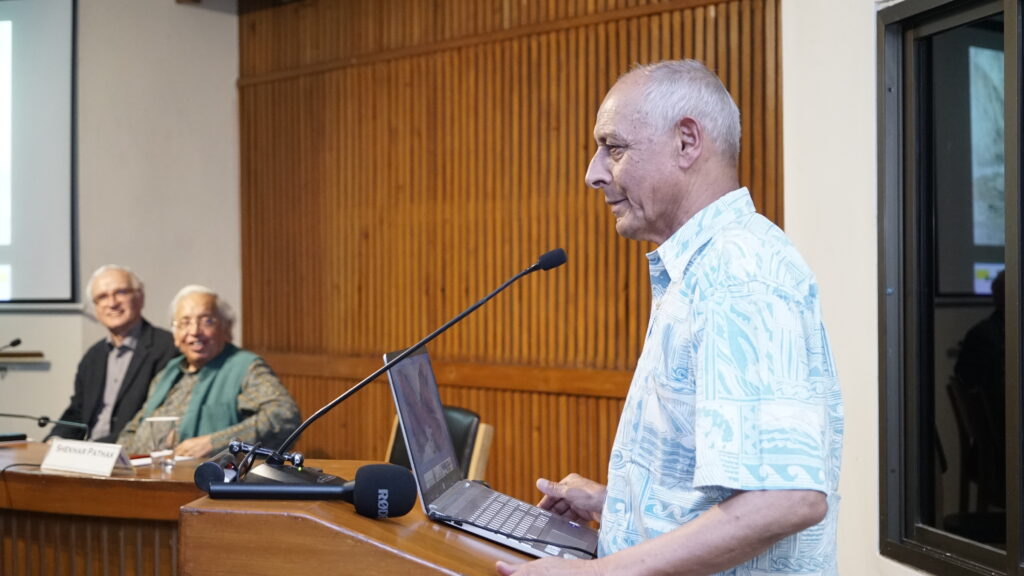
As Shekhar Pathak began speaking, the room seemed to come alive. His style was different—less like a lecture, more like a story gently unfolding. It is always a privilege to hear Shekhar da and receive even a few drops from his vast reservoir of Himalayan knowledge, and this time was no different. You could sense it instantly—this was not just history being presented; it was lived experience, carefully remembered and vividly retold.
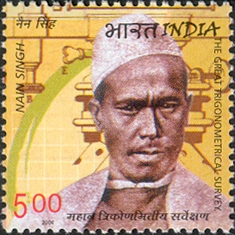
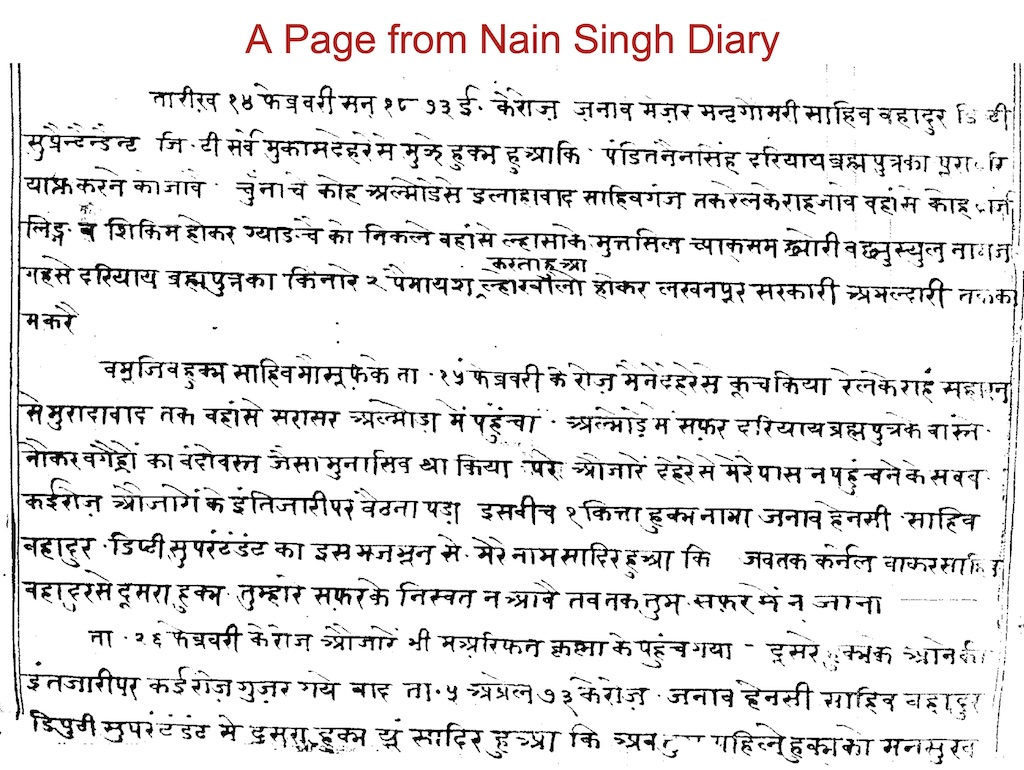
At the center of it all stood a man I thought I already knew—Pundit Nain Singh Rawat.
I had read about him before. I had even read Shekhar Da’s own work on him. And yet, within minutes, it became clear that I was about to meet Nain Singh all over again.
From Porter to Pioneer
The story didn’t begin with glory. It began with hesitation.
Nain Singh started his journey as a porter—a “coolie”—for the Schlagintweit expedition. Even this entry was uncertain. His cousin, Mani Singh—famously nicknamed “Mani Compassi” for his mastery with navigation tools—was reluctant to take him along.
But something remarkable happened.
Within just two weeks, Nain Singh transformed himself from a laborer into an indispensable member of the expedition. He spoke Tibetan fluently—a rare and valuable skill—and quickly learned to handle complex scientific instruments like the sextant and boiling-point thermometers used to calculate altitude.
Imagine that shift: from carrying loads to measuring mountains.
The Schlagintweit brothers were so impressed that they wanted to take him to England to help compile their findings. But Nain Singh refused. Crossing the seas—the dreaded “kala pani”—meant risking social and caste exclusion.
So he chose to stay.
It was a decision rooted not in fear, but in the complex realities of identity, belonging, and survival in 19th-century India.
A Childhood Shaped by Loss
Then came a story that changed the tone of the room.
Shekhar da spoke of Nain Singh’s father, Amar Singh—known locally as Lata—a man remembered both as a folk hero and a tragic figure. He fell in love with a married woman, an act that led to his social ostracization and loss of property.
What followed was devastating.
After losing a legal battle—reportedly decided under British authority—two of the women in his life took their own lives by jumping into the Gori River.
Nain Singh recorded these events himself. This makes him a great record keeper.
This was not just background. It explained something deeper: why Nain Singh grew up on the margins of his own community, shaped by instability, loss, and a certain distance from social norms.
Sometimes, the greatest explorers are those who never fully belonged anywhere to begin with.
The Secret Surveyor
By the mid-19th century, large parts of Tibet and Central Asia were closed to outsiders. Foreigners entering these regions risked death.
So the British devised a plan.
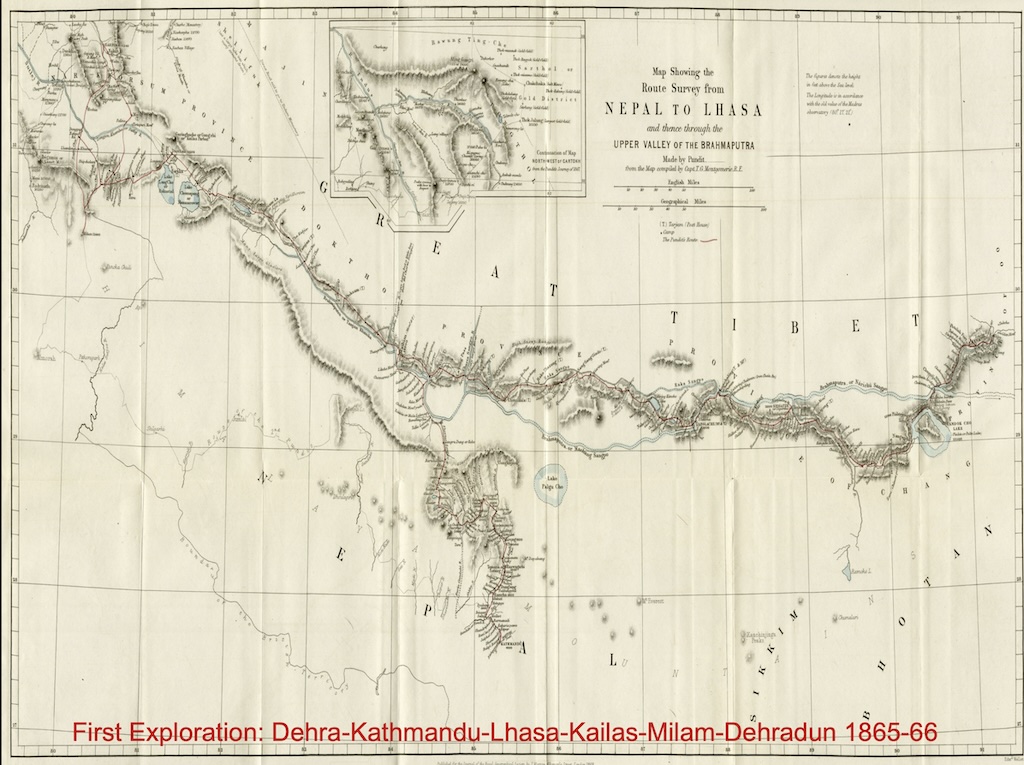
They trained Indian surveyors—known as “Pundits”—to travel in disguise, gathering geographical data in secret as part of the Great Trigonometrical Survey.
Nain Singh became one of their finest.
But this was no ordinary fieldwork. It was a blend of science, endurance, and quiet deception.
- He hid survey notes inside a modified prayer wheel (mani-chakra)
- He replaced the traditional 108-bead rosary with one of 100 beads to simplify counting
- Every 100 steps, a bead would pass through his fingers
And his precision? Almost unbelievable.
He calibrated his stride so that 2,000 steps equaled exactly one mile. Even in extreme conditions—thin air, freezing temperatures, constant danger—he maintained this rhythm.
His body became an instrument.
His journey became measurement.
A Rebel, a Chase, and Counting Steps While Escaping Death
One of the most gripping moments in the lecture felt almost cinematic.
While traveling in Tibet, Nain Singh encountered a fugitive from the Indian Rebellion of 1857—a man who had fled across the Himalayas to survive.
At one point, Nain Singh was attacked by dacoits.
It was this rebel who saved him.
And then came the detail that left the room in stunned silence:
Even while escaping on horseback—his life in danger—Nain Singh continued counting.
Not his fear. Not his breaths.
The steps of the horse.
Because for him, every movement was data. Every journey, a map in the making.
Recognition, Reluctance, and a Powerful Statement
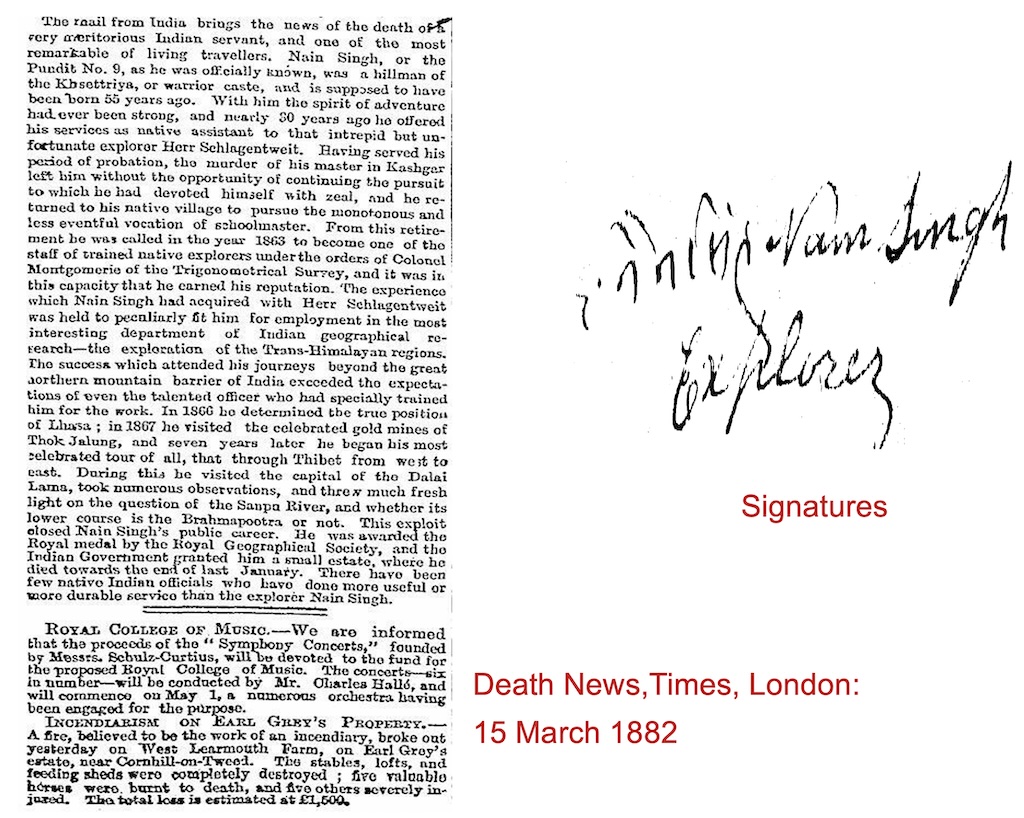
Despite his extraordinary achievements, recognition did not come easily.
At the Royal Geographical Society in London, there was debate. Could an Indian surveyor be placed alongside the great European explorers?
It took the conviction of Henry Yule to settle the matter.
His words still resonate:
“His observations have added a larger amount of important knowledge to the map of Asia than those of any other living man…”
Yule went further—drawing comparisons with legendary explorers like David Livingstone and James Augustus Grant.
And then he delivered the line that would define Nain Singh’s legacy:
“He is the Pundit of Pundits.”
It wasn’t just praise. It was a correction of history.
Walking 26,000 Kilometres Into History
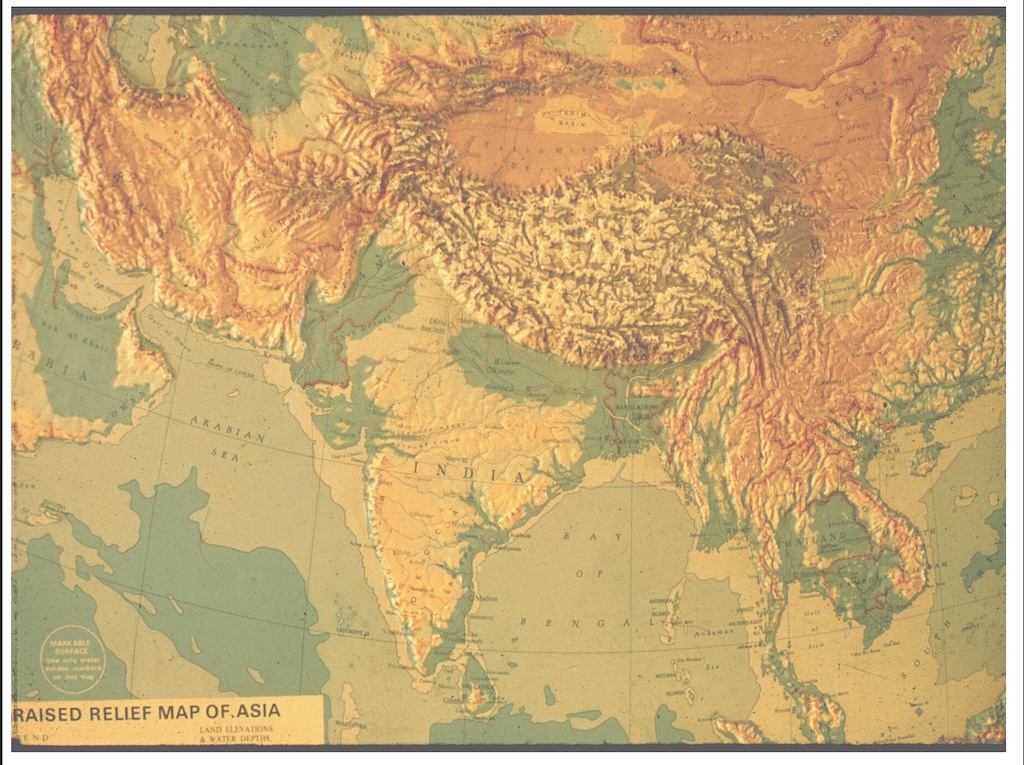
By the end of his career, Nain Singh had traveled over 26,000 kilometers across some of the harshest terrains on Earth.
He mapped rivers, identified mountain passes, recorded settlements—over 100 locations that were previously unknown to modern cartography.
He did all this quietly. Without the fanfare that often followed European explorers.
And yet, his work reshaped how Asia was understood.
Listening Differently
As the session ended, I realized something had shifted again.
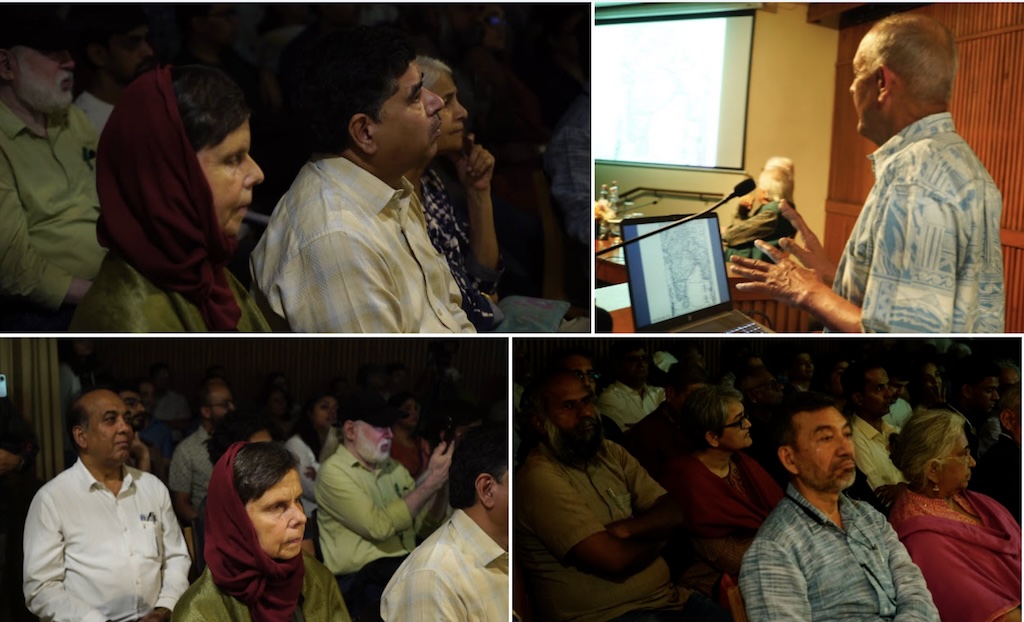
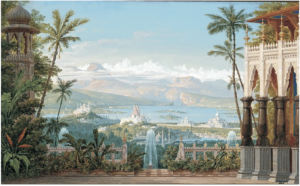
The Schlagintweit drawings we had come to see—the landscapes, the mountains, the distant horizons—no longer felt like distant, aesthetic objects.
They felt inhabited.
Behind every line and contour, there were footsteps. Conversations. Risks. Choices.
And somewhere in those lines, if you looked closely enough, you could almost see a man walking—counting each step—turning movement into knowledge.
Not loudly. Not dramatically.
Just steadily.
Like the Himalayas themselves.
Part -1: Beyond Exploration: The Human Stories Behind the Schlagintweit Drawings
Part -3: The Closing That Opened New Worlds